

From Take-Off Performance to Airline Decision Making: Inside This Week’s BECOME A PILOT Session
How much runway does an aircraft need to take off? What happens if the runway is wet or covered in grass? What difference does adding extra weight make? And what happens when four aspiring pilots are given an airline problem, limited information and have to agree on a solution?
That was the challenge facing students during the latest live session of our BECOME A PILOT Programme.
This week we moved from the atmosphere into aircraft performance, before finishing the evening with something very different: students working in small teams to tackle an airline-style decision-making exercise.
It meant moving from calculations and performance charts to communication, teamwork, problem solving and decision making all within a single session.
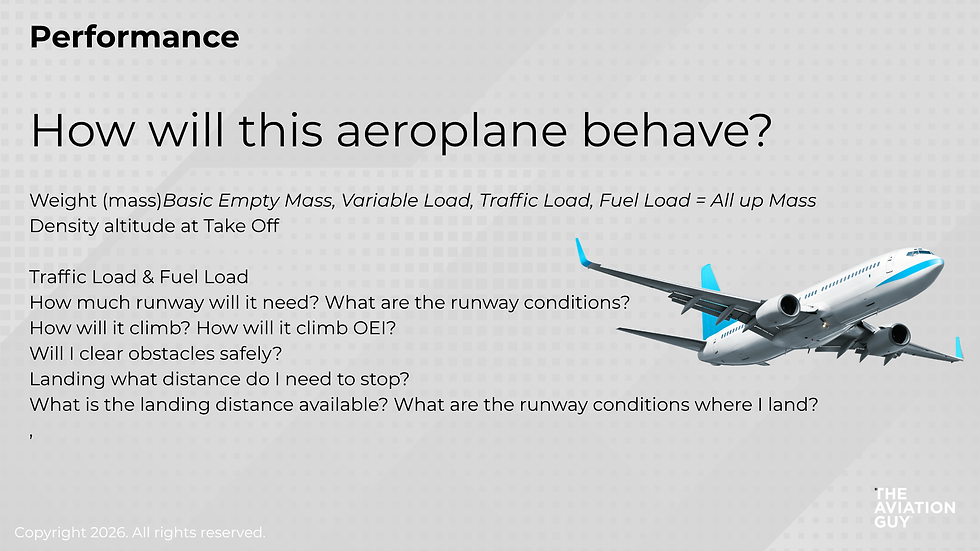
First: what is density altitude?
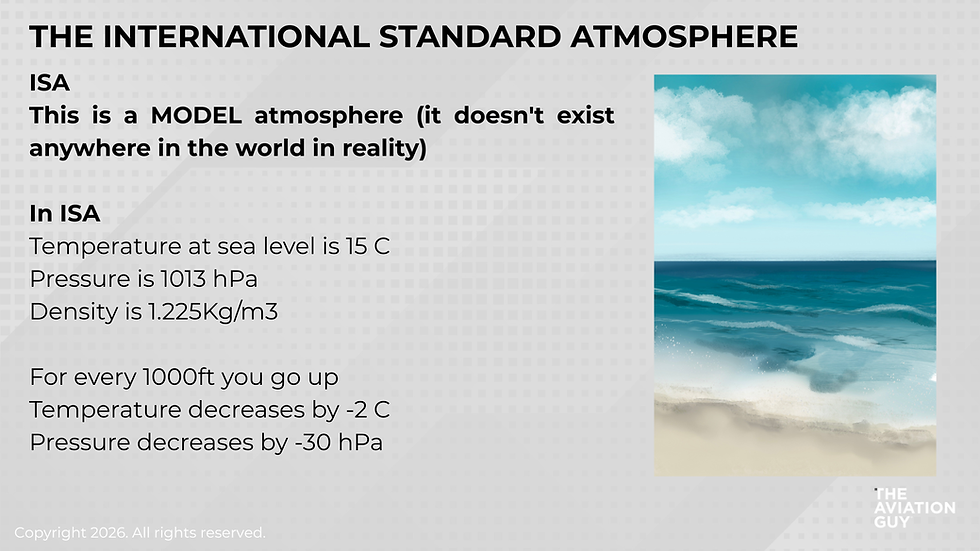
We started by revisiting the atmosphere. Students had previously learned about pressure, temperature, air density and the International Standard Atmosphere (ISA). This week we took that knowledge and applied it to aircraft performance.
One of the concepts we introduced was density altitude.
The atmosphere outside doesn't conveniently follow ISA every day. Temperature, pressure and humidity change, and consequently so does the density of the air.
Density altitude gives pilots a useful way of considering the actual atmospheric conditions in relation to the standard atmosphere when assessing how an aircraft will perform.
An aircraft operating from an airfield on a cold day at sea level can behave very differently from the same aircraft operating from a higher airfield on a hot day.
Students began to explore why.
Why does air density affect an aircraft?
Lower air density can affect several parts of aircraft performance.
The wings, propeller and engine can all be affected by the conditions in which the aircraft is operating.
For the pilot, the practical questions become:
How much runway will we need?
How well will the aircraft climb?
And what performance can we expect when we come back to land?
Suddenly the atmospheric theory students learned previously had a very practical purpose. This is an important feature of the BECOME A PILOT Programme. Rather than learning topics in isolation, students begin connecting them. Meteorology leads into performance. Performance connects with mass and balance. Mass affects take-off and landing and eventually all of those pieces of information contribute to the decisions made by the flight crew.
How much runway do we actually need?
We then introduced students to aircraft performance charts. Rather than simply giving students a formula and asking them to calculate an answer, they had to begin interpreting information in the way a pilot does.
Using aircraft performance data, students worked through a series of different scenarios to determine the take-off distance required and landing distance required.
That meant considering the aircraft, atmospheric conditions and runway before extracting the relevant information from the chart.
This is where the learning becomes much more applied.
It's no longer:
"Can you remember this fact?" Instead, the question becomes: "Here is your aircraft. Here are today's conditions. Here is your runway. Can you determine whether the performance works?"

Now let's change the scenario...
Of course, real flying doesn't always present pilots with perfect conditions. So we started changing things.
What happens if additional bags are loaded onto the aircraft?
What happens as aircraft mass increases?
What if the runway is grass rather than a paved surface?
What happens if the runway is wet?
Students looked at how different circumstances can require adjustments to the calculated performance figures and why pilots need to consider these factors
before departure or landing, rather than discovering the problem once the aircraft is already accelerating down the runway.
It's an important lesson in the mindset behind professional aviation.
The calculation itself matters. But so does recognising which calculation you need to perform, which factors apply and what the answer means operationally.

Then we put the calculators away
For the final part of the evening, the session changed completely.
Students were split into breakout rooms of four and given a challenge based on the type of group exercise candidates can encounter during airline pilot selection.
Their aircraft had a problem.
Replacement parts were located in different geographical regions of the UK.
Their job was to work together to determine how those parts could be retrieved and get the aircraft back into service.
But, naturally, it wasn't quite that simple. The scenario contained logistical challenges and competing pieces of information that the students needed to interpret.
They had to consider the available options, discuss priorities, manage the information they had been given and ultimately agree on a workable plan.
And they had to do it as a team.
Introducing TDODAR
To help structure the problem, students used the TDODAR decision-making model:
T – Time How much time do we have available?
D – Diagnose What exactly is the problem?
O – Options What possible solutions are available?
D – Decide Which option are we going to choose?
A – Assign Who is going to do what?
R – Review Is our plan working, and has anything changed?

It's a useful framework because it stops decision making becoming an unstructured conversation. Students have to establish the problem, generate options, make a decision and then turn that decision into action.
But we weren't only interested in the answer
This is where the exercise becomes particularly interesting.
There may be a solution that gets the aircraft parts back fastest but getting the answer isn't the only purpose of the exercise.
How did the group arrive at it?
Did somebody dominate the discussion?
Did somebody recognise that another student hadn't spoken and bring them into the conversation?
Did students listen to each other's ideas?
Could somebody challenge an incorrect assumption without creating conflict?
Did the team keep track of time?
Could they communicate their final plan clearly?
These are the kinds of behaviours that matter in a multi-crew flight deck.
Welcome to the non-technical side of becoming a pilot
Modern airline selection isn't simply about finding somebody who can manipulate the controls of an aircraft. Airlines need pilots who can communicate, cooperate, solve problems, manage workload, maintain situational awareness and make effective decisions.
That is why group exercises are commonly associated with airline selection processes. It's also why the Knowledge, Skills and Attitudes (KSA) element of professional pilot training matters.
Learning the technical knowledge required for the ATPL examinations is one part of becoming a professional pilot. Developing the ability to apply knowledge effectively while working with other people is another.
Our students are beginning to experience both.
From ISA to an airline assessment exercise
There's a deliberate progression behind these sessions. Students have already explored atmospheric pressure, density, temperature, weather, ISA and altimetry.
This week they took some of that knowledge and used it to understand aircraft performance.
They then used performance charts to solve take-off and landing problems.
And finally, they were placed into teams and asked to tackle an operational problem using a structured decision-making model.
That's exactly what the BECOME A PILOT Programme is intended to provide.
We're not trying to turn 14–19-year-olds into airline pilots overnight.
We're giving aspiring pilots an opportunity to experience the subjects, calculations, terminology, problem solving and behaviours they'll eventually encounter during professional flight training and airline selection.
For some students, it confirms that this is exactly what they want to do.
For others, it shows them areas they need to develop. Both are incredibly useful things to discover before spending tens of thousands of pounds on flight training.
And next week, we'll build on it again.
Because becoming a pilot isn't simply about learning to fly an aeroplane. It's about learning to think, calculate, communicate and make decisions like a pilot too.


Comments